





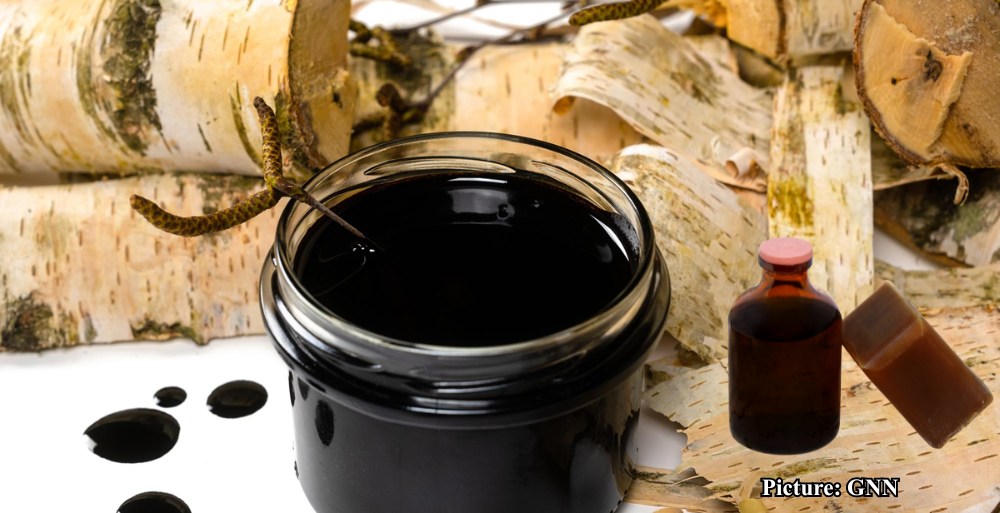
A recent study suggests that Neanderthals utilized birch tar not only for adhesive purposes but also for its antibacterial properties, potentially offering insights into ancient medicinal practices that could inform modern medicine.
In a significant development within the field of archaeology and anthropology, researchers from the University of Cologne, the University of Oxford, and the University of Liège have uncovered evidence that Neanderthals, who lived approximately 200,000 years ago, employed birch tar as a medicinal substance. This sticky material, derived from birch bark, has been known primarily for its use as an adhesive in hafting spear points, but its potential therapeutic applications are only now being explored in depth.
The study, published in the journal PLOS One, illuminates the versatility of birch tar and highlights the sophisticated knowledge of medicinal practices among Neanderthal populations. Tjaark Siemssen, an archaeologist and the lead author of the study, noted, “Alongside these findings, there is also growing evidence of medicinal practices and the use of plants among Neanderthals, which is why we were interested in the use of birch tar in this context.” This statement underscores the increasing recognition of Neanderthals as complex beings with a nuanced understanding of their environment.
Recreating Ancient Practices
To investigate the medicinal properties of birch tar, the research team undertook an experimental reconstruction of the tar production methods likely used by Neanderthals. They sourced bark from two types of birch trees that were prevalent during the Late Pleistocene epoch, roughly between 129,000 and 11,700 years ago. The researchers employed three distinct methods to extract tar: one inspired by traditional Mi’kmaq practices and two others mimicking potential Neanderthal techniques.
The first method involved heating birch bark in a tin, which reflects the enduring legacy of Indigenous knowledge systems. The other two methods involved burning birch bark in a sealed underground pit for dry distillation and burning it adjacent to a stone surface to collect the tar that condensed there. The resulting tar samples were then subjected to biological testing at Cape Breton University in Nova Scotia to assess their antibacterial properties.
Antibacterial Effects and Their Significance
The study’s co-author, Matthias Bierenstiel, a professor of chemistry at Cape Breton University, stated, “That is exactly what we proved. The substance Neanderthals made 200,000 years ago, we now know, also possesses antibacterial properties.” The findings revealed that the birch tar demonstrated varying levels of antibacterial activity against Staphylococcus aureus, a bacterium commonly associated with wound infections. However, it was noted that while the tar showed promise, its effectiveness was not on par with modern antibiotics such as Gentamicin and it had no effect on Escherichia coli, a bacterium typically found in the human gut.
This discovery highlights the resourcefulness of Neanderthals in utilizing their natural environment for medicinal purposes. The researchers suggest that birch tar’s ubiquitous nature likely contributed to its discovery and use. Siemssen explained, “Birch tar gets everywhere whenever anyone is trying to do anything with it. Plus, a little tar goes a long way: just 0.2 grams can cover 100 cm² of skin.” This characteristic would have made birch tar a readily accessible resource for treating wounds.
Implications for Modern Medicine
The implications of this research extend beyond the realm of archaeology and into contemporary medical challenges. The effectiveness of birch tar against Staphylococcus aureus raises critical questions regarding the potential of ancient medicinal practices to inform modern healthcare. In the United States, infections caused by Staphylococcus aureus result in approximately 500,000 hospitalizations each year, making the search for effective treatments increasingly urgent.
Siemssen concluded, “Our findings show that it might be worthwhile to examine targeted antibiotics from ethnographic contexts – or, as in this case, from prehistoric contexts – in greater depth.” This perspective suggests that as antibiotic resistance becomes a growing concern in contemporary medicine, revisiting historical remedies may provide valuable insights and inspire new therapeutic strategies.
Historical Context and Future Research Directions
Historically, the use of natural substances for medicinal purposes has been a cornerstone of human healthcare practices. The revelation that Neanderthals utilized birch tar not only as an adhesive but also as an antibacterial treatment underscores the cyclical nature of healthcare, where ancient knowledge may once again play a critical role in addressing modern health issues. The research contributes to an evolving understanding of Neanderthal life, suggesting that they possessed a sophisticated knowledge of their environment that included medicinal applications.
As researchers continue to explore ancient practices, the potential for integrating historical knowledge into modern medicine becomes increasingly apparent. The study serves as a reminder of the importance of examining our past to inform our present, particularly in the face of emerging health challenges such as antibiotic resistance. Future research may focus on isolating the active components within birch tar and testing their efficacy against a broader range of pathogens, which could ultimately lead to the development of new treatment modalities.
In conclusion, the discoveries made by the research team not only enrich our understanding of Neanderthal life but also highlight the potential of ancient remedies to contribute to contemporary medical solutions. As the medical community grapples with the challenges posed by antibiotic-resistant infections, revisiting the practices of our ancient relatives may offer pathways to innovative treatments grounded in historical knowledge.






No Comment! Be the first one.