






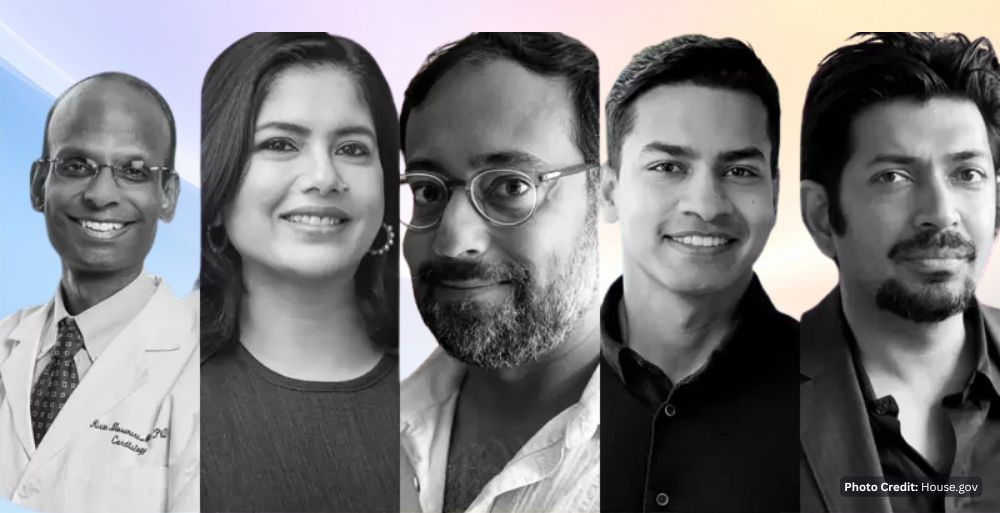
The global healthcare landscape is undergoing a profound transformation driven by artificial intelligence, genetic engineering, and advanced epidemiological surveillance. In its 2026 edition of the TIME100 Health list, TIME magazine has highlighted the influential role of five Indian American leaders who are at the forefront of these medical and technological shifts. The honorees, Karan Singhal, Kiran Musunuru, Nabarun Dasgupta, Priti Bandi, and Siddhartha Mukherjee, represent a diverse cross-section of the medical field, ranging from Silicon Valley tech innovators to academic researchers and public health advocates. Their inclusion on the prestigious list underscores the significant contributions of the Indian-American community to the evolution of global healthcare systems and the integration of emerging technologies into clinical practice.
Karan Singhal, a San Francisco-based technologist who leads the Health AI team at OpenAI, was recognized for his role in democratizing medical information through sophisticated large language models. With more than 40 million users daily seeking health advice through ChatGPT, Singhal oversaw the 2026 launch of ChatGPT Health. This specialized tool allows patients to upload personal medical records and data to receive tailored guidance, effectively acting as a digital health companion. To ensure the safety and clinical accuracy of the platform, Singhal collaborated with a network of over 260 physicians worldwide. His efforts have led to the implementation of AI-driven clinician copilots at major medical institutions, including Boston Children’s Hospital and Cedars-Sinai Medical Center, bridging the gap between consumer technology and professional medical care.
In the realm of personalized medicine, Kiran Musunuru was honored for his groundbreaking work in gene-editing therapies. Serving as the director of the Genetic and Epigenetic Origins of Disease Program at the Penn Cardiovascular Institute, Musunuru played a pivotal role in a historic medical milestone involving CRISPR technology. Working alongside Nobel laureate Jennifer Doudna’s team and Rebecca Ahrens-Nicklas of the Children’s Hospital of Philadelphia, Musunuru helped develop a personalized therapy for a dynamic case involving a rare enzyme deficiency. In early 2025, the team administered the first-of-its-kind treatment to an infant born with a mutation that prevented protein processing. The success of this intervention, which bypassed traditional animal testing to address an urgent genetic need, is viewed by many in the scientific community as a template for the future of individualized genomic medicine.
Public health and the ongoing challenge of the opioid crisis formed the basis for the recognition of Nabarun Dasgupta. An epidemiologist and associate professor at the University of North Carolina at Chapel Hill, Dasgupta directs the Opioid Data Lab, which tracks emerging synthetic threats such as medetomidine. His work extends beyond academic research into direct community intervention. As a co-founder of the nonprofit Remedy Alliance, Dasgupta has facilitated the distribution of over 6 million doses of naloxone, a life-saving opioid antagonist, to high-risk populations since 2022. By expanding community drug-checking initiatives and monitoring street-level substance trends, his efforts have provided a critical safety net for those affected by the evolving landscape of synthetic drug use in the United States.
The importance of preventative care and cancer screening was highlighted through the work of Priti Bandi, the scientific director of Cancer Risk Factors and Screening Surveillance Research at the American Cancer Society. Based in Atlanta, Bandi has focused her research on identifying and removing the barriers that prevent eligible adults from accessing life-saving screenings. A significant study led by Bandi in late 2025 estimated that universal lung cancer screening could prevent more than 62,000 deaths over a five-year period. Her research emphasizes that scientific advancement must be accompanied by policy changes to address access barriers, including the high cost of care, pandemic-related disruptions, and the lack of imaging technology in rural areas. Bandi continues to advocate for systemic changes that ensure medical innovations reach the populations that need them most.
Siddhartha Mukherjee, a Pulitzer Prize-winning author and oncologist at Columbia University Irving Medical Center, was recognized for his dual contributions to medical literature and drug discovery. In 2025, Mukherjee released a significant update to his seminal work, The Emperor of All Maladies, incorporating the rapid advancements in cancer detection and treatment that have occurred over the last decade. Beyond his writing, Mukherjee has embraced the potential of artificial intelligence to accelerate the development of new pharmaceuticals. He co-founded Manas AI alongside tech entrepreneur Reid Hoffman to utilize computational models in the screening of millions of potential chemical compositions. This venture aims to identify virtual medicines at a scale and speed previously thought impossible, marking what Mukherjee describes as a massive turning point in the field of oncology.
The collective achievements of these five individuals reflect a broader trend toward the synthesis of data science and traditional biology. Whether through the creation of AI-driven diagnostic tools or the application of CRISPR to rare diseases, the work of these Indian-American leaders suggests a future where healthcare is more proactive, personalized, and accessible. Their recognition by TIME magazine places them among the most influential figures shaping the trajectory of modern medicine. The honorees are scheduled to be formally recognized during the TIME100 Impact Dinner in New York City on February 19, where they will join other global leaders to discuss the continued evolution of healthcare delivery and innovation.
As the medical field continues to navigate the complexities of the 21st century, the contributions of these specialists provide a roadmap for addressing both chronic diseases and acute public health crises. From the development of low-cost harm reduction tools to the exploration of the most advanced frontiers of genetic science, their work highlights the multi-faceted nature of modern health leadership. The integration of AI into both patient-facing tools and back-end drug discovery, as demonstrated by Singhal and Mukherjee, represents a particularly significant shift that is likely to define the next decade of medical progress. Meanwhile, the advocacy and research of Bandi and Dasgupta ensure that the human element and the necessity of equitable access remain at the center of the scientific conversation.
The recognition of these leaders also highlights the critical role of academic and research institutions in fostering innovation. With affiliations ranging from the University of Pennsylvania and Columbia University to the University of North Carolina, these honorees demonstrate how academic research can be successfully translated into real-world applications that save lives and improve patient outcomes. Their work serves as a testament to the power of interdisciplinary collaboration, bringing together technologists, clinicians, and social scientists to solve some of the most pressing health challenges of the modern era.





No Comment! Be the first one.