





Argentina is grappling with a severe economic crisis as inflation rates soar to historic highs, exacerbated by a contentious presidential election that has left the nation divided. The incoming administration faces daunting challenges in stabilizing the economy while addressing public discontent over rising costs.
Argentina is currently in the throes of an economic crisis, marked by an inflation rate that has surged to an alarming 142% in October, the highest in over three decades. This financial upheaval is occurring against the backdrop of a contentious presidential election that has polarized the electorate and raised serious questions about the country’s economic future.
The recently elected President Javier Milei, a far-right libertarian with radical proposals, has promised to overhaul the economy by implementing sweeping reforms. He campaigned on a platform that includes dollarizing the economy and cutting government spending drastically, measures he argues are necessary to restore economic stability. However, critics warn that such drastic changes could lead to increased hardship for ordinary Argentines already struggling with a rising cost of living.
In his first public address after the election, Milei stated, “We are going to put an end to this disastrous cycle of inflation. No more misery.” His remarks were met with a mix of hope and skepticism, as many Argentines are wary of the implications of such drastic economic measures. The president’s supporters argue that bold action is necessary to break free from decades of mismanagement, while opponents fear that his policies may deepen inequality and social unrest.
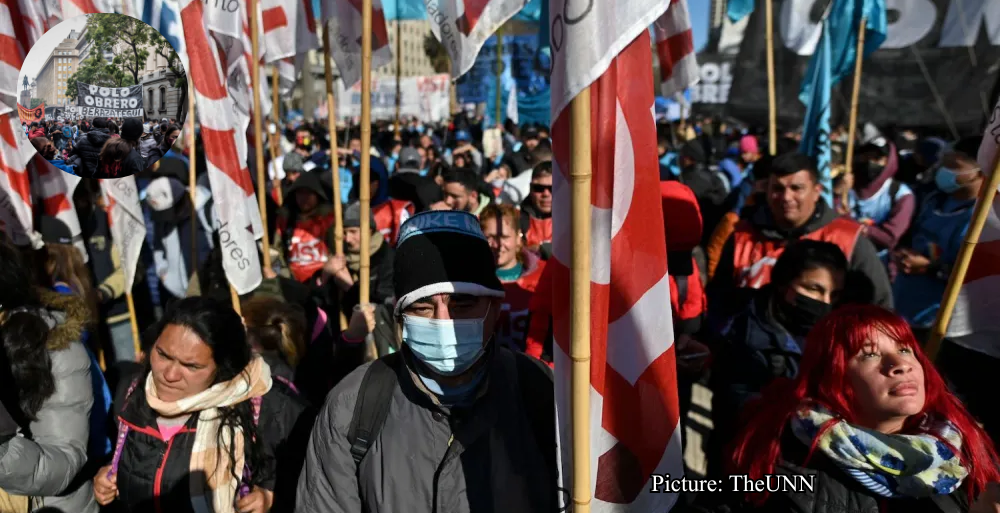
The economic turmoil has led to widespread protests across the nation, as citizens express their frustration over soaring prices and dwindling purchasing power. Grocery prices have skyrocketed, making it increasingly difficult for families to afford basic necessities. “Every week, it feels like we have to make impossible choices about what to buy,” said Mariana López, a mother of three from Buenos Aires. “We are tired of being told that the economy will get better when it’s only getting worse.”
The economic discontent is further complicated by the political landscape. The election itself was marked by a record low voter turnout, reflecting widespread apathy and disillusionment with the traditional political establishment. Many voters opted for Milei not out of support for his policies, but as a rejection of the status quo. His rise to power has been both a symptom and a catalyst of the profound dissatisfaction felt by many Argentines.
International analysts are closely monitoring Argentina’s situation, as the country’s economic instability has broader implications for the region. The International Monetary Fund (IMF), which has been involved in multiple bailout negotiations with Argentina over the years, is now waiting to see how Milei will navigate the complex landscape of debt repayment and economic reform. “Argentina’s new administration faces an uphill battle in restoring confidence, both domestically and internationally,” said Julia O’Connor, an economist at a leading financial institution. “The stakes are high, and the potential for backlash is significant.”
Milei’s government is expected to face immediate challenges, including negotiations with the IMF and addressing the urgent needs of a population that has grown increasingly restive. The new administration has promised to prioritize economic recovery, but many are skeptical of the feasibility of Milei’s ambitious plans. “You can’t turn a ship around overnight,” said Manuel García, a political analyst based in Buenos Aires. “The changes he proposes will take time to implement, and the question remains whether he can maintain public support as the challenges unfold.”
The situation is further complicated by Argentina’s long history of economic volatility, characterized by cycles of boom and bust, hyperinflation, and debt crises. The country has defaulted on its debt multiple times, and many Argentines remember the devastating economic crisis of 2001 that led to widespread poverty and social unrest. This historical context adds a layer of complexity to the current crisis, as citizens grapple with the fear that history may repeat itself.
As the new government prepares to take office, the pressure to deliver results is mounting. With inflation continuing to rise, and public patience wearing thin, Milei’s administration will need to act quickly and decisively to restore confidence. The path forward remains uncertain, but one thing is clear: the journey toward economic recovery will be fraught with challenges and will demand careful navigation through the turbulent waters of public opinion and economic policy.
In the coming weeks, all eyes will be on Argentina as the new government sets its agenda. Whether Milei can translate his bold rhetoric into effective policy will determine not only his political future but also the well-being of millions of Argentines struggling to make ends meet.




No Comment! Be the first one.