




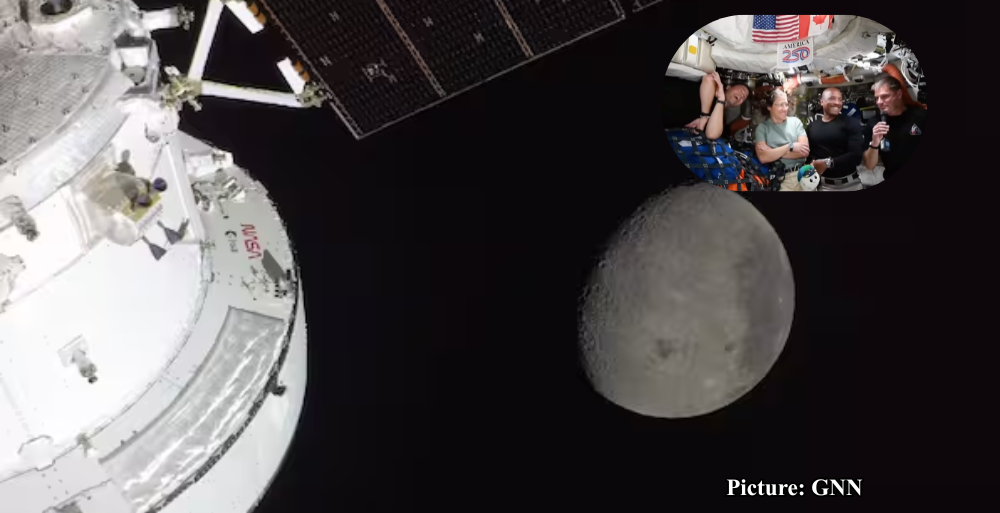
The Artemis II crew’s successful return on April 10, 2026, marks a pivotal moment in NASA’s Artemis program, reigniting public interest in lunar exploration and human spaceflight.
The Artemis II crew made a triumphant return to Earth on Friday, April 10, 2026, after completing a historic 10-day journey around the Moon aboard NASA’s Orion spacecraft. The mission concluded with a splashdown in the Pacific Ocean near San Diego, California, marking a significant milestone in NASA’s Artemis program, which aims to return humans to the lunar surface for the first time since the Apollo missions.
The Artemis II mission included an accomplished crew of NASA astronauts: Reid Wiseman, serving as commander; Victor Glover, the pilot; Christina Koch, mission specialist; and Canadian Space Agency astronaut Jeremy Hansen, also a mission specialist. During their journey, the crew achieved several critical objectives, including setting a new record for the farthest distance humans have traveled in space and testing various essential systems aboard the Orion spacecraft. These systems included life support, maneuverability, and the heat shield, as well as the first toilet designed for use in lunar orbit.
Widespread Public Engagement
The successful splashdown was celebrated across the country, with fans gathering in stadiums and public venues to watch the event on large screens. The excitement surrounding the Artemis II mission reflects a renewed public interest in space exploration and the possibilities it holds for future generations. As the capsule descended, viewers witnessed the culmination of years of planning and innovation, bringing a sense of national pride.
Upon their arrival aboard the USS John P. Murtha, the astronauts received a warm welcome, celebrating their safe return after a groundbreaking mission. Christina Koch, a veteran astronaut, was particularly celebrated, highlighting the personal and collective pride associated with this historic journey into space.
The Artemis Program’s Vision
The Artemis program, initiated by NASA, aims to return astronauts to the lunar surface by 2025 and establish a sustainable human presence on the Moon by the end of the decade. This program is seen as a crucial stepping stone for preparing future missions to Mars and beyond. The Artemis II mission serves as a precursor to Artemis III, which is anticipated to include a lunar landing.
Historically, the last time humans set foot on the Moon was during the Apollo 17 mission in 1972. The Artemis series seeks to revitalize lunar exploration and lay the groundwork for deep space exploration, with the next mission, Artemis III, expected to launch in the coming year to focus on testing the equipment necessary for lunar landings.
Technical Innovations and Achievements
The Artemis II mission successfully demonstrated the capabilities of the Orion spacecraft across several critical areas. The life support systems were tested in a real lunar environment, providing invaluable data for future missions. The capsule’s heat shield underwent rigorous testing during re-entry, ensuring the safety of astronauts in subsequent missions.
Beyond technical achievements, the mission underscored the significance of international collaboration in space exploration. Canadian astronaut Jeremy Hansen’s participation exemplified the growing partnerships among nations in the pursuit of scientific discovery and exploration. Such collaborations not only enhance technological development but also strengthen diplomatic ties between countries.
Implications for Future Generations
As the Artemis program progresses, it is expected to inspire a new generation of scientists, engineers, and explorers. The successful return of the Artemis II crew serves as a testament to human ingenuity and the importance of continued investment in space exploration. The mission’s success has reignited interest in STEM fields, encouraging young people to consider careers in science and technology.
The Artemis II mission’s successful completion marks a significant step forward in NASA’s ambitious plans for lunar exploration. As preparations for Artemis III continue, the agency is focusing on building on the successes of this mission to ensure that future missions can advance human exploration of the Moon and beyond. The excitement surrounding the Artemis program highlights a renewed commitment to exploring the cosmos, with the potential to unlock new scientific discoveries and inspire future generations.
Looking Forward: The Next Steps
NASA’s Artemis program is poised to redefine humanity’s relationship with space. The lessons learned from Artemis II will play a crucial role in shaping the upcoming Artemis III mission, which aims to land astronauts on the lunar surface. This ambitious plan reflects a broader vision to establish a sustainable presence on the Moon, laying the groundwork for future human missions to Mars and beyond.
Moreover, the international nature of the Artemis program, with contributions from partners such as the Canadian Space Agency, emphasizes the collaborative spirit essential for tackling the challenges of space exploration. As countries come together to share expertise and resources, the global community can foster an inclusive approach to scientific advancement.
Overall, the successful splashdown of Artemis II not only celebrates a historic achievement but also marks the beginning of a new era in space exploration, one that holds promise for scientific breakthroughs and the continued pursuit of knowledge beyond our planet.



No Comment! Be the first one.