





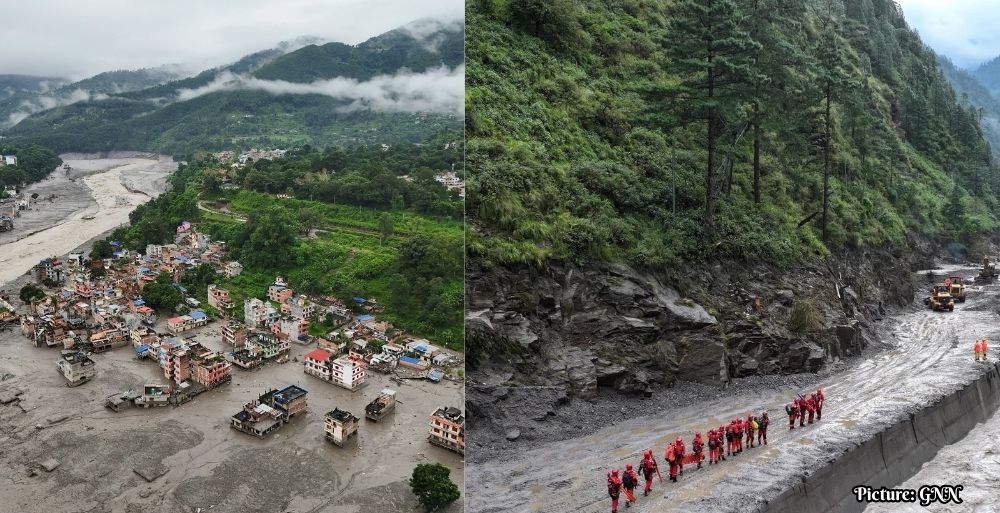
A recent disaster along the China-Nepal border has highlighted the increasing risks associated with infrastructure development in the Himalayas, where nations are investing heavily in projects to harness hydropower and enhance security.
BEIJING — A catastrophic flooding event along the China-Nepal border has raised urgent questions about the safety and sustainability of ongoing infrastructure expansions in the Himalayan region. The disaster, which has claimed the lives of over 600 individuals and left approximately 3,000 more missing, underscores the growing dangers posed by natural disasters as countries in the region intensify their development efforts.
While there is currently no evidence linking the recent flooding to human-made infrastructure, the tragedy serves as a stark reminder for governments that are pushing forward with extensive projects, including dams, highways, and railways, in an area already vulnerable to earthquakes, climate change, and other natural hazards.
The Scale of Current Infrastructure Projects
China has emerged as the most aggressive developer in the region, viewing Tibet and its surrounding Himalayan territories as vital for national and energy security. The Chinese government is actively working to transform the area into a significant green energy hub, with investments such as a $168 billion megadam project currently under construction. This ambitious initiative aims to harness the tremendous hydropower potential of the region.
India, similarly, has ramped up its own infrastructure efforts, investing hundreds of millions of dollars in various projects that include hydropower stations and railways. Nepal, in a lesser capacity, has also joined the infrastructure race, often relying on support from its larger neighbors as they compete for influence.
Recent Catastrophe and Its Implications
The recent flooding event was triggered by a massive landslide caused by the calving of a glacier, which unleashed torrents of water that devastated buildings and infrastructure across the border. Rescue operations have been hampered by the risk of subsequent disasters, such as additional flooding and landslides from newly formed barrier lakes. In a recent meeting of China’s ruling Communist Party, leader Xi Jinping acknowledged the “enormous challenges to rescue and emergency response efforts” posed by the region’s complex geological hazards.
The incident has prompted experts to urge governments to reconsider their infrastructure development strategies in light of the increasing unpredictability of natural disasters exacerbated by climate change. Austin Lord, a senior fellow at the Stimson Center, emphasized the need for collaboration, stating, “If we don’t start working on them together then we won’t make any progress, and we’ll just be overwhelmed again next time.”
The Geopolitical Landscape
The Himalayan region, characterized by its unique geological and ecological features, plays a crucial role in supplying water to millions across the Indian subcontinent. However, the ongoing infrastructure boom has been driven by the dual motivations of resource extraction and national security, particularly in the context of the longstanding border disputes between China and India.
According to Ruth Gamble, an environmental historian at La Trobe University, the perception of the region has shifted from one of potential instability to one of abundant resources. This transformation has spurred not only hydropower projects but also mineral extraction and tourism initiatives, all of which contribute to a growing military presence in the area.
China’s extensive infrastructure projects, including ultra-high-voltage power transmission lines and new military facilities along disputed borders, reflect its strategy to assert dominance in the region. Notably, a recent clash between Chinese and Indian forces in the Himalayas further complicates the geopolitical landscape.
Climate Change and Infrastructure Risks
The implications of climate change for infrastructure development in the Himalayas are profound. Experts warn that the frequency and severity of natural disasters are increasing, with historical patterns being disrupted. For instance, what were once considered rare events, such as “100-year floods,” are now occurring every few years.
This week, Nepal experienced significant power outages, with over 430 megawatts of capacity lost due to the flooding, impacting multiple dams and under-construction projects. As infrastructure continues to be built in this unpredictable environment, the risk of disasters remains high.
Data Sharing and Regional Cooperation
As nations in the region pursue ambitious development plans, the necessity for effective data sharing and cooperative monitoring systems becomes increasingly clear. Following the recent disaster, there were unfounded rumors regarding a dam failure on the Chinese side of the border, highlighting the need for transparency and communication to mitigate mistrust among neighboring countries.
China’s Embassy in Nepal rejected allegations regarding the disaster and emphasized the importance of cooperation for saving lives. Chinese leader Xi Jinping expressed readiness to assist Nepal in rescue efforts, and discussions are ongoing about monitoring potentially hazardous barrier lakes.
Despite historical tensions, Chinese and Indian officials have committed to maintaining dialogue on hydrological data sharing, with plans for future meetings to address transboundary river management. Experts argue that successful infrastructure development in the Himalayas will require not only advanced engineering solutions but also a collaborative approach to risk management and disaster preparedness.
In conclusion, the recent flooding disaster serves as a critical juncture for Himalayan nations, urging a reevaluation of infrastructure projects in the face of escalating natural hazards. As climate change continues to shape the landscape, the need for coordinated efforts to ensure safety and sustainability in this ecologically sensitive region has never been more urgent.






No Comment! Be the first one.