





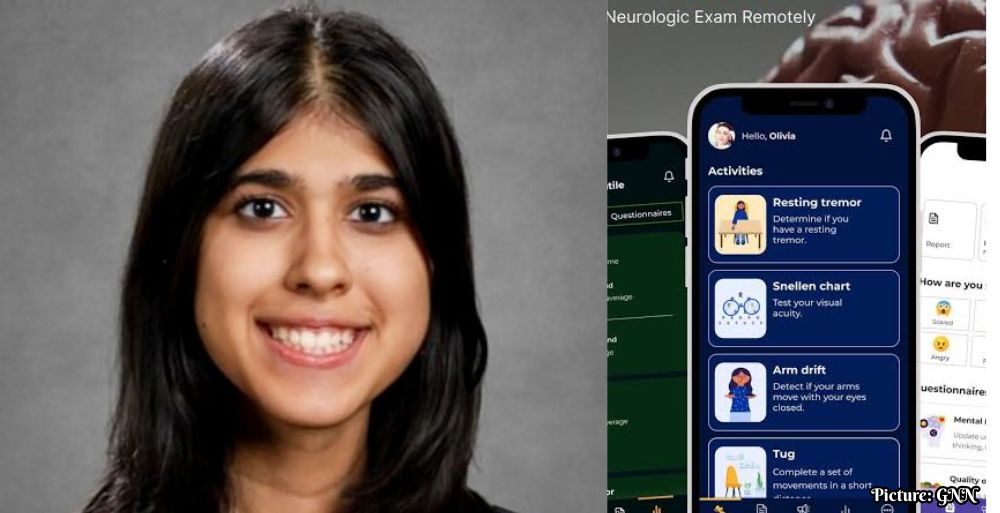
A 16-year-old student from Bellevue has created an app aimed at helping users detect early signs of neurodegenerative diseases such as Parkinson’s, Alzheimer’s, and ALS, providing families with a new tool to facilitate early intervention.
In a notable display of ingenuity and social responsibility, Ilina Rao, a 16-year-old junior at Interlake High School in Bellevue, Washington, has developed an application named NeuroSpeak. This innovative app is designed to assist users in identifying early indicators of neurodegenerative diseases through voice analysis, specifically targeting conditions such as Parkinson’s disease, Alzheimer’s disease, and amyotrophic lateral sclerosis (ALS). Rao’s project emerged as part of her participation in Technovation Girls, a global initiative aimed at empowering young women to engage in technology development and entrepreneurial ventures.
Rao’s journey began when she learned about Technovation Girls from peers who had previously participated in the program. The competition attracts thousands of participants from around the world, with this year seeing approximately 33,000 entrants across 160 countries. In June, she was recognized as a semifinalist, a significant achievement in a highly competitive field. Although she did not advance to the finals, which were recently announced, Rao expressed gratitude for the exposure and constructive feedback her project received. “The competition gave me the opportunity to share my work,” she remarked.
Concept and Functionality of NeuroSpeak
The inception of NeuroSpeak stemmed from Rao’s desire to create a meaningful impact in the healthcare sector. She observed a gap in existing healthcare technologies, noting that many artificial intelligence (AI) tools were primarily designed for use within clinical settings and often overlooked the needs of patients and their families. Rao explained, “I noticed that a lot of tools using AI for healthcare were built for hospitals or specialists and not for, you know, families or those who really need the answers the most.” With this in mind, she set out to develop a solution that would be accessible to individuals who may face barriers in seeking medical assistance.
NeuroSpeak operates on a simple premise: users are prompted to record 30-second voice samples daily. The app’s AI technology analyzes these recordings for patterns that may indicate the early onset of neurodegenerative diseases. Rao emphasized that while NeuroSpeak serves as a valuable screening tool, it is not intended for formal diagnoses. “It’s a screening tool,” she clarified, “not a diagnostic tool.” This distinction is crucial, as Rao seeks to ensure that users understand the app’s limitations while still benefiting from its early detection capabilities.
Currently, NeuroSpeak is not available for public use, as Rao is focused on further refining the application. One of her primary goals is to make the technology available free of charge, thereby democratizing access to crucial healthcare tools. In this way, NeuroSpeak aims to assist not only patients in urban areas with access to specialists but also those in rural communities, individuals lacking insurance, and others who may struggle to connect with healthcare providers.
Challenges in Neurodegenerative Disease Diagnosis
The challenge of diagnosing neurodegenerative diseases is compounded by the complexities of human speech. Even seasoned medical professionals often find it difficult to accurately identify which speech patterns correspond to specific conditions. Rao stated, “Humans, including medical professionals, have difficulty telling which speech patterns correlate with which neurodegenerative conditions,” underscoring the importance of NeuroSpeak’s capabilities. By leveraging AI, the app aims to streamline the identification of symptoms and provide users with a more efficient means of monitoring their health.
In addition to the voice analysis feature, NeuroSpeak includes an integrated symptom journal that allows users to document their experiences and track any changes over time. This feature not only enhances the user experience but also aids in correlating voice patterns with the progression of symptoms, thereby providing a more comprehensive picture of the individual’s health status.
Personal Development and Future Aspirations
While Technovation Girls typically encourages participants to collaborate in teams, Rao opted to work independently on NeuroSpeak, dedicating herself to the project for several months. “I worked almost every single day for months to develop and present the app,” she recalled, a testament to her commitment and determination. Her hard work paid off, as she advanced through multiple rounds of judging, gaining recognition for her innovative approach and dedication to addressing a critical healthcare issue.
Rao’s participation in the competition has not only bolstered her confidence but has also reinforced her belief in the potential impact of her work. “It’s given me a lot of confidence, being chosen to be a semifinalist, that I can make an impact and that my efforts mean something and that I was able to help people,” she stated. This experience has solidified her aspirations to continue developing technology that makes healthcare more accessible and user-friendly.
As Rao continues to refine NeuroSpeak, her journey exemplifies the intersection of youth, technology, and healthcare. The app not only represents a significant step forward in the realm of accessible healthcare solutions but also highlights the potential for young innovators to drive change in critical areas of society. In an era increasingly characterized by digital health solutions, NeuroSpeak may serve as a model for future developments aimed at improving early detection and monitoring of neurodegenerative diseases, ultimately empowering patients and their families to take a proactive role in their healthcare journey.






No Comment! Be the first one.