





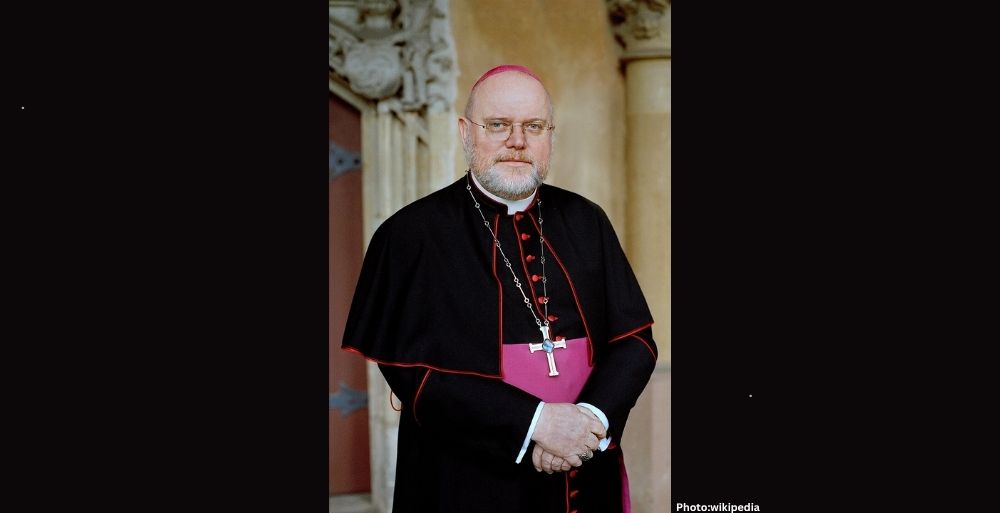
Cardinal Reinhard Marx of Munich has announced new guidelines allowing clergy to bless same-sex couples and others in non-traditional unions, marking a significant shift in pastoral practice that challenges traditional Church teachings.
Munich, Germany – On April 21, 2026, Cardinal Reinhard Marx, a prominent figure in the German Catholic Church, unveiled a set of guidelines that authorize blessings for couples who are either unable or unwilling to enter into sacramental marriage. This decision places the Archdiocese of Munich and Freising at the forefront of a contentious debate within the Catholic Church regarding how to reconcile complex personal circumstances with established theological principles. The initiative seeks to address the pastoral needs of various groups, including divorced and civilly remarried Catholics, as well as same-sex couples.
The newly approved guidelines, which were established in 2025 by a collaborative body consisting of the German bishops’ conference and a significant lay organization, propose structured ceremonies for a variety of couples. While the guidelines clarify that these blessings do not equate to sacramental marriage, they nonetheless introduce stable and repeatable rites that raise important theological and liturgical questions.
Pastoral Framing and Implementation
Cardinal Marx has articulated the rationale behind these guidelines in explicitly pastoral terms. In his communication to clergy, he emphasized the importance of inclusivity within the Church, stating that no couple should feel excluded from its life. He described a blessing as a fundamental invocation of God’s goodness upon individuals, which can serve as a gesture of welcome and spiritual support. Furthermore, he has called for greater educational efforts within parishes, urging priests and lay ministers to elucidate the theological meaning of blessings to those who may be hesitant to accept the new practices.
To facilitate the implementation of these guidelines, the Archdiocese plans to initiate training programs starting in June 2026. Clergy members who are unwilling to officiate such ceremonies are expected to refer couples to other ministers or the local deanery. Critics of this provision argue that it reduces conscientious objection to a mere procedural formality rather than providing substantial safeguards for clergy who may disagree with the new practices.
Context and Contradictions
This initiative is partially inspired by a 2023 Vatican declaration that permitted non-liturgical blessings for couples in “irregular” situations. However, that document established clear stipulations: such blessings should be spontaneous, brief, and distinctly separate from any marriage rite. The Vatican’s concerns stem from a desire to avoid confusion among the faithful regarding the nature of marriage, which the Church defines as an exclusive and indissoluble union between a man and a woman, oriented towards the good of the spouses and the transmission of life.
The German guidelines, however, raise controversy by proposing structured ceremonies that integrate into diocesan pastoral planning, potentially exceeding the parameters set forth by the Holy See. This divergence is not merely theoretical; several dioceses, including the Archdiocese of Cologne, have explicitly declined to adopt the guidelines, asserting that they extend beyond what the universal Church permits. Other dioceses, such as Augsburg, Eichstätt, Passau, and Regensburg, have expressed similar reservations, highlighting a lack of consensus among the German episcopate on this issue.
Ecclesiological Implications
The debate surrounding these guidelines raises profound ecclesiological questions: to what extent can local churches adapt pastoral practices without undermining doctrinal unity? The proposals emerged from the German “Synodal Path,” an initiative aimed at addressing governance, morality, and participation in response to the unique context of the country. Critics warn that a pastoral strategy detached from the universal Church framework could lead to the establishment of parallel norms, which over time may erode the Church’s internal cohesion.
Proponents of the guidelines argue that they represent a necessary response to real human experiences that demand acknowledgment. In increasingly secular societies, many couples seek some form of spiritual recognition, even if they do not meet canonical marriage requirements. Thus, the pastoral challenge lies in how to accompany individuals without diluting the Church’s teachings on life, family, and sacramental order.
Historical Context and Future Considerations
This tension between doctrine and mercy is not a new phenomenon in Catholic history. The Church has consistently navigated the delicate balance between maintaining doctrinal integrity and offering pastoral care. However, the rapidity and visibility with which local decisions are now broadcast globally—often magnified by media narratives that either herald them as breakthroughs or frame them as ruptures—add a new layer of complexity to the discussion.
In practical terms, the immediate effect in Munich will be the formalization of practices that have already been occurring informally in some areas. However, the broader implications for the Church are more intricate and will likely continue to provoke significant debate among clergy, laity, and theologians alike.





No Comment! Be the first one.