





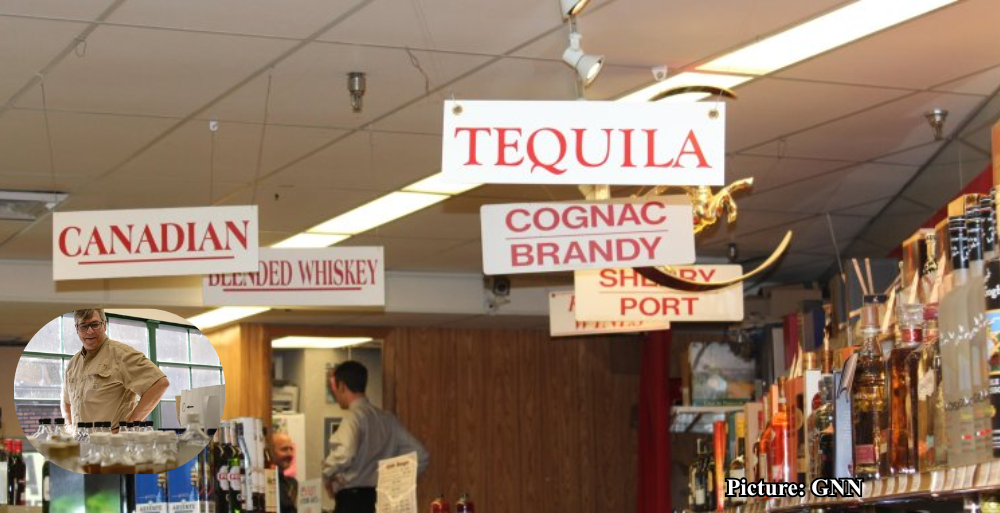
A federal appeals court has declared a nearly 158-year-old ban on home distilling unconstitutional, asserting it improperly restricts individual liberties and fails to effectively serve the government’s tax collection goals.
The Fifth Circuit Court of Appeals in New Orleans made a landmark ruling on Friday, overturning a federal law that has prohibited home distilling since its enactment in 1868. This decision favored the Hobby Distillers Association, a nonprofit organization advocating for the rights of individuals to distill alcohol for personal use, along with four of its members.
The original ban was enacted during the post-Civil War Reconstruction era, primarily as a measure aimed at curbing liquor tax evasion. Under the law, violators faced severe penalties that included potential imprisonment for up to five years and fines as high as $10,000.
Historical Context of the Ban
The prohibition against home distilling was part of a broader effort by the federal government to regulate alcohol production and ensure compliance with tax obligations. The Reconstruction period was marked by significant shifts in federal authority and economic regulation, as the nation sought to rebuild and stabilize following the Civil War. The 1868 law reflects the government’s strategy to bolster tax revenues through stringent controls over alcohol production at a time when illicit distilling was rampant.
Judicial Reasoning Behind the Ruling
In her opinion for the three-judge panel, Circuit Judge Edith Hollan Jones articulated that the ban has counterintuitively reduced tax revenue by pushing home distillers underground, thus inhibiting the government’s ability to collect taxes on legally produced spirits. She emphasized that laws regulating the production and labeling of distilled spirits would be more effective for tax purposes than an outright prohibition.
Judge Jones also raised concerns regarding the broader implications of the government’s rationale, asserting that if Congress could criminalize home distilling, such reasoning could extend to any unregulated home activity, including telecommuting and small home-based businesses. “Without any limiting principle, the government’s theory would violate this court’s obligation to read the constitution carefully to avoid creating a general federal authority akin to police power,” she stated.
Responses from Stakeholders
The U.S. Department of Justice had no immediate comment following the ruling, nor did the Treasury Department’s Alcohol and Tobacco Tax and Trade Bureau respond to requests for a statement. However, advocates for home distilling celebrated the decision as a significant affirmation of individual liberties.
Devin Watkins, a lawyer representing the Hobby Distillers Association, characterized the ruling as a pivotal moment regarding the limits of federal power. He emphasized that this decision underscores the importance of individual rights in the face of government overreach. Watkins further noted, “This ruling validates the rights of individuals to engage in personal distillation without fear of federal prosecution.”
Andrew Grossman, another attorney involved in the appeal, remarked on the ruling’s implications for personal freedoms, stating that it marks “an important victory for individual liberty” that will allow the plaintiffs to pursue their passion for distilling beverages at home. “I look forward to sampling their output,” he added, reflecting the enthusiasm among advocates for home distilling.
Legal Precedent and Future Implications
This ruling upholds a prior decision from July 2024 by U.S. District Judge Mark Pittman, who had initially ruled the ban unconstitutional but placed his ruling on hold pending the government’s appeal. The Fifth Circuit’s decision now sets a significant legal precedent that challenges longstanding federal restrictions on home distilling.
The implications of this ruling extend beyond home distilling, potentially influencing broader discussions about regulatory authority and personal freedoms in various domains. Legal experts suggest that this case may open the door for more challenges to federal regulations that restrict individual liberties under the guise of taxation and regulation.
The Path Forward: Regulatory Changes Ahead?
As the case unfolds further, questions arise regarding how federal authorities will respond to this ruling and whether it will prompt a reevaluation of legislation governing home distilling practices across the United States. This ruling could serve as a catalyst for broader reforms in alcohol regulation, reflecting a shift towards a more permissive approach to personal freedoms.
The decision may also encourage individuals interested in home distilling to engage in their craft without the fear of legal repercussions, potentially leading to an increase in small-scale distilling operations and a burgeoning market for artisanal spirits. As more individuals take up home distilling, there may also be calls for regulations that ensure safety and quality in the production of these spirits, fueling an ongoing debate about the balance between individual rights and public safety.
In conclusion, the Fifth Circuit’s ruling not only marks a significant moment in the landscape of federal regulation of alcohol but also serves as a reminder of the ongoing tensions between government authority and individual freedoms in the United States. The future of home distilling, as well as the broader implications for regulatory practices, is now poised for significant change.




No Comment! Be the first one.