





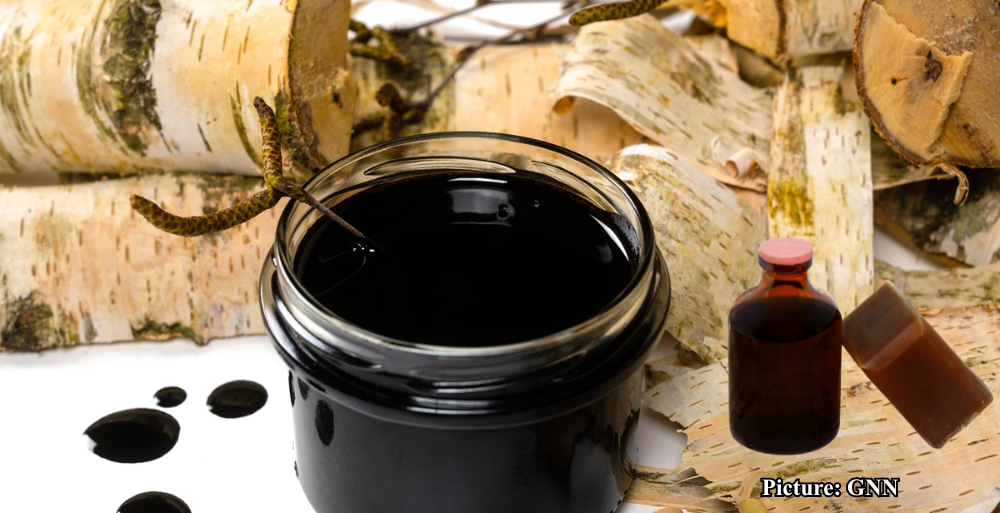
A new study indicates that Neanderthals utilized birch tar not only as an adhesive but also for its antibacterial properties, suggesting advanced medicinal practices among ancient populations up to 200,000 years ago.
In a significant advancement in the understanding of Neanderthal capabilities, a collaborative study involving researchers from the University of Cologne, the University of Oxford, and the University of Liège has provided compelling evidence that these ancient humans may have employed birch tar, a sticky substance derived from the bark of birch trees, for medicinal purposes. This research, published in the journal PLOS One, suggests that Neanderthals utilized birch tar not only as a glue for hafting tools but also as an early form of antibacterial treatment, potentially predating modern medical practices by thousands of years.
The Multifaceted Uses of Birch Tar
Birch tar has long been recognized in archaeological contexts as a versatile material. Traditionally, it was used by Neanderthals to attach stone points to wooden spear handles, a technique known as hafting, which has been documented across various archaeological sites in Europe. This substance also served as one of the earliest known water sealants, highlighting its multifaceted applications in everyday life.
According to Tjaark Siemssen, an archaeologist at the University of Cologne and the lead author of the study, there is a growing body of evidence supporting the idea that Neanderthals engaged in complex medicinal practices, including the use of natural substances derived from plants. “Our interest in birch tar stemmed from this growing recognition of Neanderthal medicinal practices,” Siemssen stated, emphasizing the need to explore the potential medicinal uses of materials like birch tar.
Recreating Ancient Techniques
To investigate the antibacterial properties of birch tar, the researchers set out to recreate the tar using methods that would have been accessible to Neanderthals. They sourced bark from two types of birch trees that were prevalent during the Late Pleistocene epoch, which spanned from approximately 129,000 to 11,700 years ago. The team employed three distinct methods to extract the tar: one inspired by the traditional practices of the Mi’kmaq Indigenous people of Nova Scotia, and two that mimicked techniques likely used by Neanderthals themselves.
The first extraction method involved heating birch bark in a tin container, reflecting the Mi’kmaq’s long history of utilizing birch tar in their traditional medicine. The second method involved burning birch bark in a sealed underground pit to facilitate a dry distillation process in the absence of oxygen. The third method replicated a technique where birch bark was burned next to a hard surface, such as stone, allowing the tar to condense on the surface.
Antibacterial Properties of Birch Tar
After successfully recreating birch tar, the researchers conducted biological tests at Cape Breton University in Nova Scotia to assess its antibacterial properties. Matthias Bierenstiel, a professor of chemistry and co-author of the study, confirmed the findings: “What we proved is that the substance Neanderthals made 200,000 years ago possesses antibacterial properties.” The results demonstrated that the extracted tar exhibited significant antibacterial activity against Staphylococcus aureus, a bacterium commonly associated with wound infections.
While birch tar proved effective against certain bacteria, it was noted that its antibacterial potency did not match that of modern antibiotics such as Gentamicin. Additionally, the tar showed no effectiveness against Escherichia coli, a bacterium typically found in the intestines. These findings suggest that Neanderthal use of birch tar may have been specifically targeted toward treating wounds and skin conditions at risk of infection.
Historical Insights and Modern Implications
The implications of this study extend beyond understanding Neanderthal behavior; they also raise significant questions about the evolution of medical practices and the potential for rediscovering ancient remedies in the face of modern challenges, such as antibiotic resistance. Staphylococcus aureus is known to develop resistance to various antibiotics, leading to serious health risks and approximately 500,000 hospitalizations annually in the United States alone.
Siemssen emphasized this relevance, suggesting that examining historical and ethnographic medicinal practices could yield valuable insights. “Our findings show that it might be worthwhile to explore targeted antibiotics from ethnographic contexts—or, as in this case, from prehistoric contexts—in greater depth,” he noted. This perspective aligns with the notion that healthcare practices may exhibit cyclical patterns, where the effectiveness of new interventions diminishes over time, prompting a return to older, potentially effective remedies.
The study not only enhances our comprehension of Neanderthal capabilities but also underscores the relevance of ancient knowledge in contemporary medical practices. As researchers continue to explore the medicinal applications of natural substances, insights from prehistoric practices may provide valuable alternatives in combating antibiotic-resistant infections, thereby bridging the gap between ancient wisdom and modern science.





No Comment! Be the first one.